50,000 Reasons to Be Proud: Celebrating Wiltshire's Bikeability Milestone
 By Jon Hubbard
There are moments in this role that genuinely stop you in your tracks. Last week was one of them.
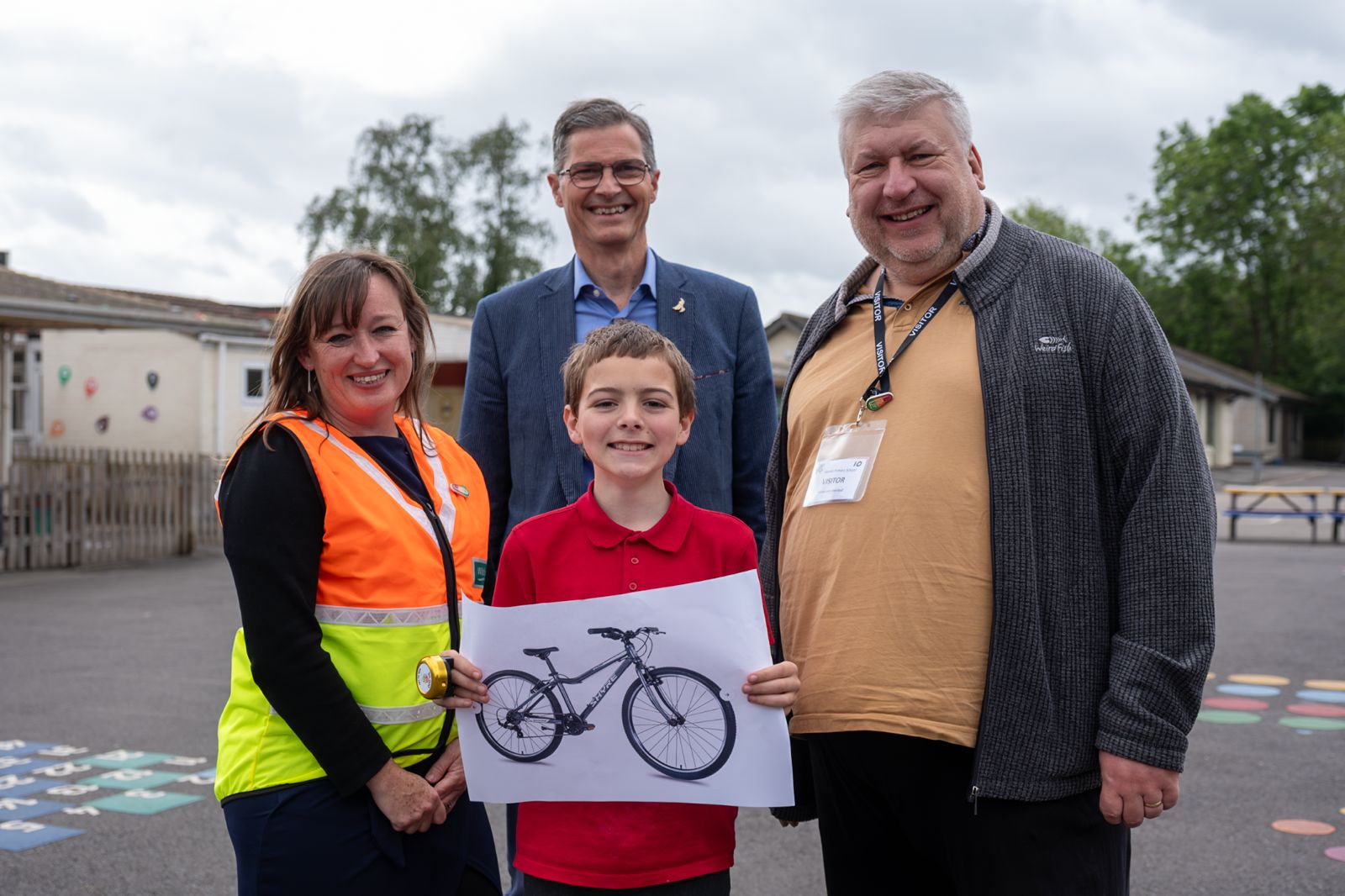
Wiltshire Council's Bikeability programme reached its 50,000th certified young person. And the young man who achieved that milestone — Leo, a pupil at Aloeric Primary School in Melksham, right here in my own division — was presented with a brand new bike as a surprise. I was there. I won't pretend it wasn't an emotional moment.
But this blog isn't really about the number. It's about what that number means, why programmes like this matter far more than people realise, and — most importantly — about the extraordinary people who make it happen every single day.
Road Safety Is a Life Skill
We spend a great deal of time in Children's Services talking about keeping children safe. We think about online safety, safeguarding, mental health, and SEND. All of it matters enormously.
But road safety? It is one of the most tangible, proven, practical things we can do to protect young people — and it doesn't get nearly enough attention.
The evidence is clear. Research by TRL, conducted for the Bikeability Trust and covering a decade of data across more than 100 local authorities, found a statistical association between higher levels of Bikeability Level 2 training and lower rates of people killed or seriously injured on our roads. That's not a marketing claim. That's peer-reviewed analysis published in a scientific journal in early 2026.
Children who learn to read a road, to anticipate the behaviour of drivers, to make decisions under pressure on a bicycle — those children carry that awareness with them for life. They become safer pedestrians, safer drivers, and safer cyclists as adults.
Around 3,500 children in Wiltshire receive Bikeability training every year. Those aren't just lessons on two wheels. They are investments in lifelong safety.
Part of a Bigger Picture
I want to be clear about something: Bikeability is brilliant, but it works best as part of a broader commitment to road safety education — not as a standalone tick-box exercise.
Children need to understand roads before they get on them. They need to understand them as pedestrians, as passengers, and eventually as cyclists and drivers. Bikeability Level 2, which gives children in Years 5 and 6 their first real experience of riding on roads with traffic, is a critical step. But it has to connect to what comes before it and what comes after.
The national picture reinforces this. After completing Bikeability training, children are five times more likely to say they intend to cycle. But intention only becomes habit when the conditions are right — when parents feel confident, when routes are safe, when cycling feels normal. That's the bigger programme we need to keep building.
Ninety-four per cent of parents report more confidence in their child cycling on roads after Bikeability training. Ninety-seven per cent say they will actively encourage their child to cycle independently. Those are remarkable numbers. They tell you that Bikeability doesn't just change the child — it shifts the whole family's relationship with cycling as a mode of transport.
The People Behind the Milestone
Here is what I really want to say.
You can talk about 50,000 children. You can cite the national figure — over 5.5 million young people trained across England since 2007. You can point to the research, the statistics, the awards. All of it is true and all of it matters.
But none of it happens without the instructors.
Wiltshire's Bikeability team works with schools across the whole county. They turn up in all weathers. They coax nervous children onto bikes for the very first time. They adapt for children with additional needs. They fix punctures, procure spare bikes, support school events, and build relationships with teachers and parents over years. They go far beyond what their role requires — because they believe in what they're doing.
When a former Cabinet Member for Transport described our instructors as people who "always go the extra mile," she wasn't being polite. It's a simple statement of fact. I've seen it. Schools tell us the same thing time and again. One school representative put it this way: the patience and commitment of the instructors left pupils, staff, and parents "blown away."
I'm proud of the programme. I am. But I am proudest of the people who deliver it.
Leo and Aloeric
So, back to Leo.
He didn't know he was going to be presented with a bike. He didn't know he was the 50,000th. He just turned up for his Bikeability session like any other child.
And then Emily Cherry, the Chief Executive of the Bikeability Trust, was there. And there was a bike with his name on it.
I hope he rides it everywhere.
That moment captures everything about why this programme matters. Not the number. The child. One child, in Melksham, in my division, who now has the skills and the confidence to ride safely — and a bike to do it on.
Fifty thousand of them. And counting.
Jon Hubbard
Cabinet Member for Children's Services, SEND, Education and Skills, Wiltshire Council
Jon is an Independent Wiltshire councillor for Melksham South, with 17 years' service. He is Cabinet Member for Children's Services, SEND, Education and Skills, and statutory Lead Member for Children's Services, having previously chaired Children's Scrutiny for 12 years. He runs Technoliga, building software to support councillors in their role, and founded 4Youth (South West) charity. He also serves as an LGA Member Peer in Children's Services, SEND, Education and Scrutiny.